
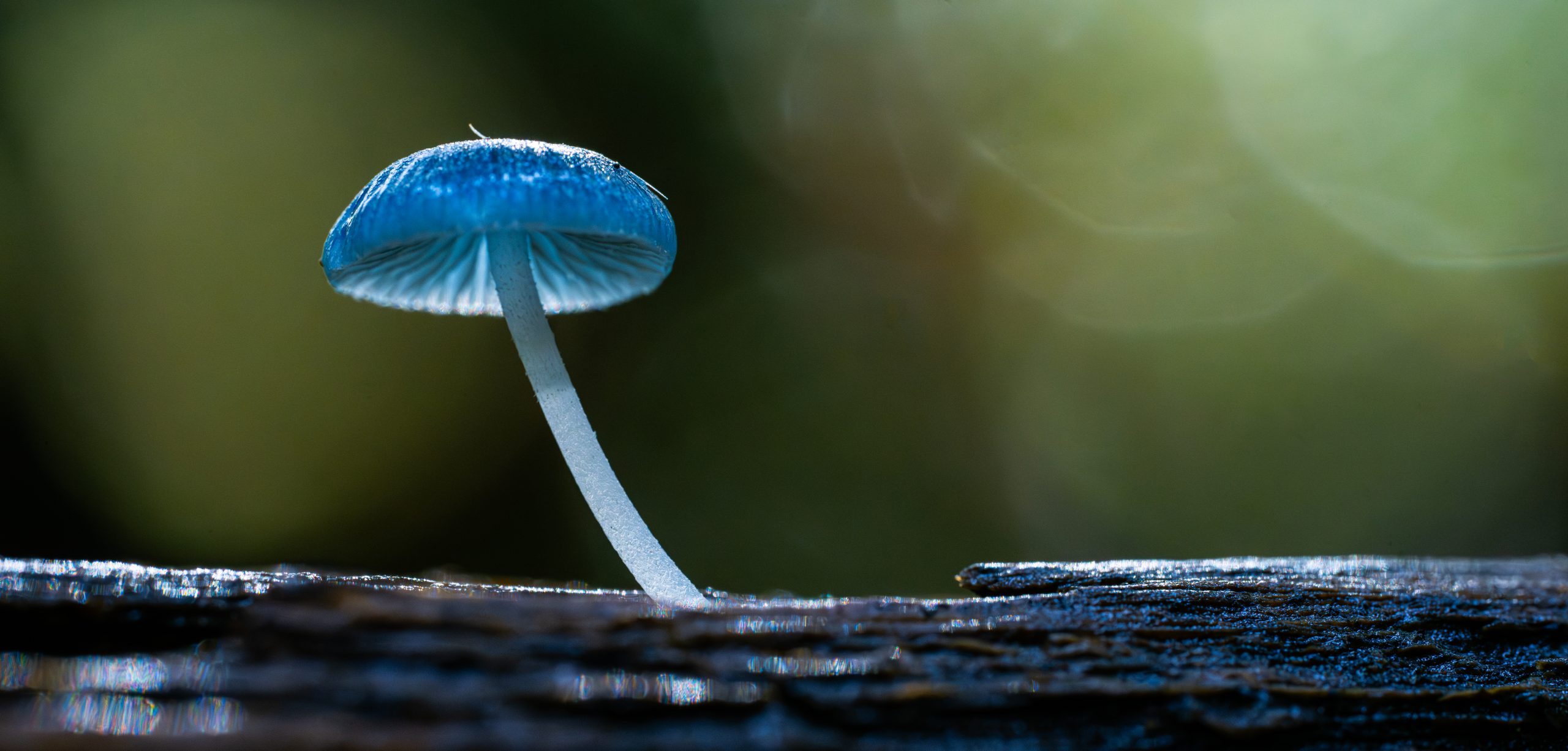
Every autumn, something remarkable happens on the forest floor in Tasmania. While the trees are doing what trees do – dropping leaves, going dormant, waiting out the cold – the fungi emerge. Quietly, overnight, in colours that seem almost impossible for something growing out of a rotting log in a rainforest.
I’ve been photographing Tasmanian fungi for years, and the season still surprises me. You can walk a track in March and see nothing. Come back three weeks later after rain and cold, and the same section of forest looks like it belongs on another planet.
When is fungi season in Tasmania?
The main season runs from April through to August, peaking in May and June. The trigger is a combination of cooler temperatures and moisture – after the first proper autumn rains, things start appearing fast. A wet week in late April can produce an extraordinary display within days.
The best conditions are overcast and damp – not ideal for most photography, but perfect for fungi. Direct sunlight dries them out quickly and the harsh contrast makes them harder to shoot. Cloudy days are your friend.
What to look for
Tasmania has an extraordinary diversity of fungal species – over 10,000 species are estimated to occur on the island, many of them found nowhere else. A few are unmistakable once you know them.
Mycena interrupta – the Pixie’s Parasol
The one that stops everyone in their tracks. Mycena interrupta is a tiny fungus – no bigger than your thumbnail – that grows in clusters on rotting wood in wet forests. The colour is an electric, iridescent blue-green that you simply don’t expect to find growing on the forest floor. It looks like something from a fantasy illustration. It’s real, it’s in Tasmania, and if you know where to look you’ll find it.
They’re small enough that most people walk straight past them. Getting close requires patience, a macro lens, and a willingness to lie flat on the wet forest floor. It’s worth every bit of discomfort.
Cortinarius – the webcaps
The largest genus of fungi in Australia, and one of the most photogenic. Cortinarius species come in a huge range of colours – deep purple, rust orange, golden yellow – and they’re often found in large groups beneath eucalyptus and beech trees. The purple species in particular are extraordinary.
Bioluminescent fungi
Tasmania is one of the best places in Australia to find fungi that glow in the dark. Mycena chlorophos and several related species produce a soft green glow through bioluminescence. Photographing them requires a very dark night, a long exposure, and a lot of patience – but the results are unlike anything else in nature photography.
Where to look in Tasmania
The wet forests of the west and south are the most productive. Anywhere with old growth myrtle beech, tree ferns, and rotting woody debris is promising. Some reliable starting points:
- Mount Field National Park – the forests around Russell Falls and Lake Dobson are exceptional. The tall eucalypt and rainforest zones produce different species, and the diversity across a single day’s walking is remarkable.
- Tahune AirWalk area – the Huon Valley forest floor is incredibly productive in autumn. Old growth huon pine areas are particularly good.
- Tarkine / Takayna – the northwest rainforests are extraordinary but require more effort to access. The rewards are significant.
- Any wet gully in southern Tasmania – you don’t need to travel far. Wet gullies with myrtle beech and rotting timber will produce fungi throughout the season.
How to photograph them
Fungi photography rewards patience and low angles more than any other subject I shoot. Here’s what works for me.
Get low. Most fungi are best photographed from below or at the same level – looking up at the cap rather than down on it. This means lying on the ground, using a beanbag, or bending a flexible tripod around obstacles. The perspective changes everything.
Use a dedicated macro lens if you have one. A 90-105mm macro lens is ideal – it gives you working distance so you’re not casting a shadow over your subject. A smartphone with a macro mode will also produce remarkable results if you get close enough.
Look for clean backgrounds. The background makes or breaks a macro shot. A blurred background of green moss or dark shadow separates your subject beautifully. Sometimes moving a single leaf makes the difference.
Don’t touch or move the fungi. Apart from the ethics of leaving wild things undisturbed, fungi are fragile – you can damage the cap just by handling them. Work around what you find.
Overcast days are better than sunshine. Soft, diffused light on a cloudy day wraps around the subject and shows detail and colour far better than harsh direct sun. If you get a sunny day, find a shaded gully.
Getting started
The best way to find fungi is simply to slow down and look. Most people walk at a pace that makes the small stuff invisible. Try walking half as fast as you normally would, and looking at the ground within two metres of the track. The forest floor will start to reveal itself.
If you want to learn more, the iNaturalist app is invaluable – photograph what you find and the community will help you identify it. Tasmania has an active naturalist community and the fungi section is particularly well supported.
The season is short. Get out there.
Fine art prints of Tasmanian fungi are available in the Macro gallery. All images are available as fine art paper prints, canvas, and metal prints through the store.